
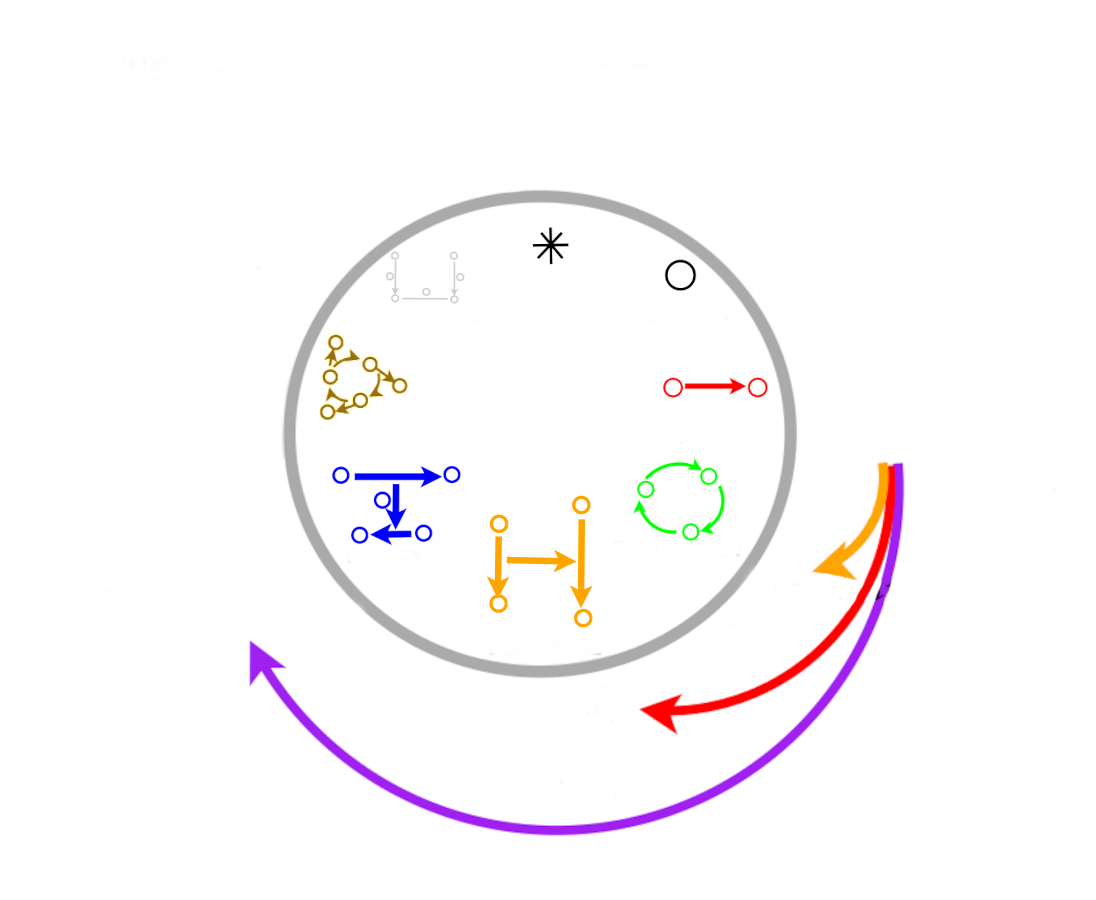
- Montijn shares his paper: A Measure-Theoretic Framework for Theories of Consciousness: Event Spaces, Information Channels, and Bridge Laws
- Jere formulates his thoughts on Ecological Intelligence
- Andrej shares a draft of his Identity framework
- Steph recommends Answering Schrödinger’s question: A free-energy formulation co-authored by Maxwell Ramstead, and Fundamentals of Active Inference by Sanjeev Namjoshi.
- Andrius is curating a Shared reality for Econet. He's interested that we think about Active Inference and the paper A Mathematical Perspective on Neurophenomenology co-authored by Maxwell Ramstead.
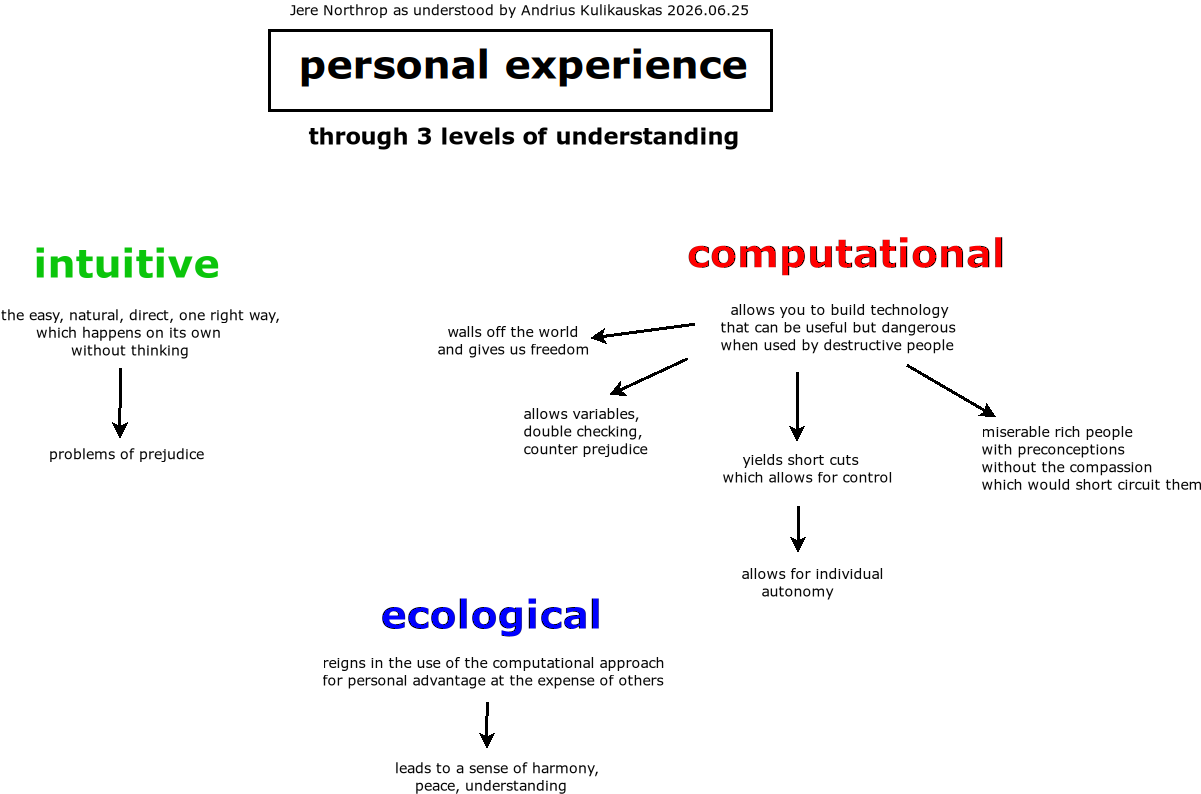 Jere's three understandings | 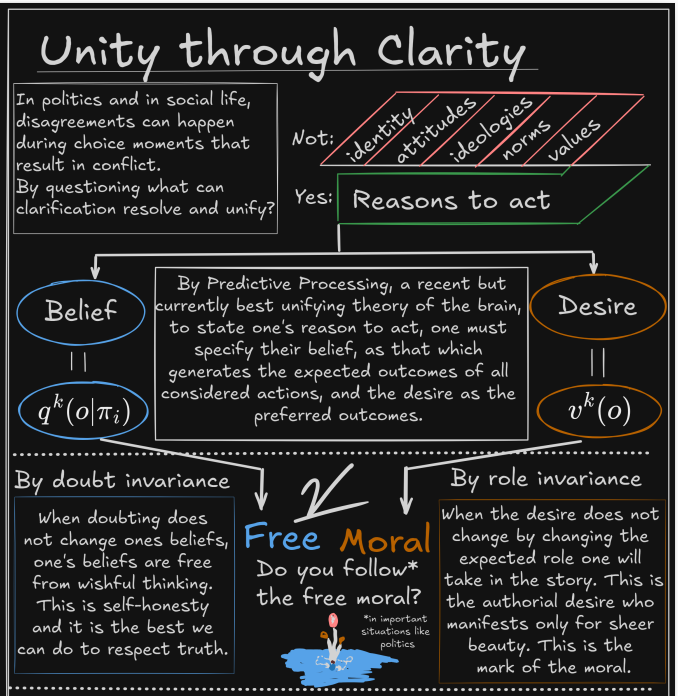 Montijn creates moral maps | 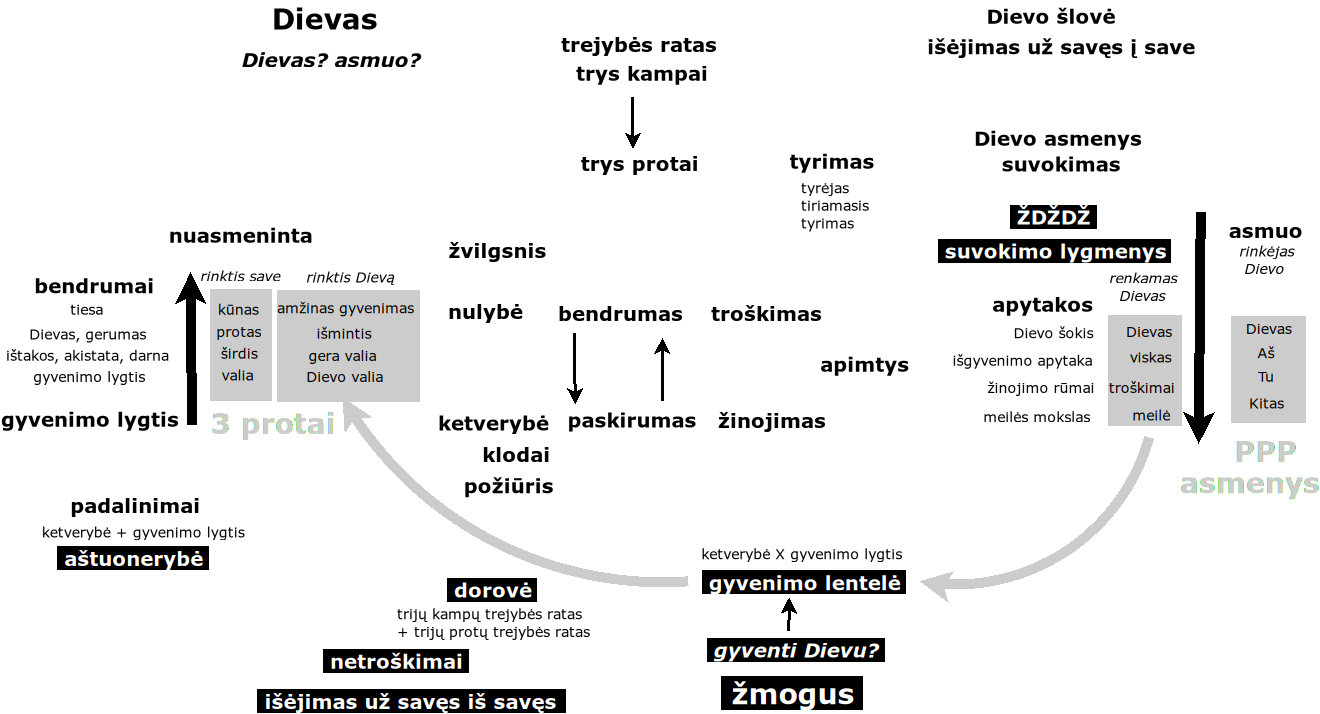 Andrius imagines God and human |

- Econet.Chat . . . by AndriusKulikauskas: Comment added
- Econet.EcologicalIntelligence . . . by AndriusKulikauskas: I added an anchor to #LynnNorthrop
- Econet.ClimateChangeProblem . . . by Jere Northrop:
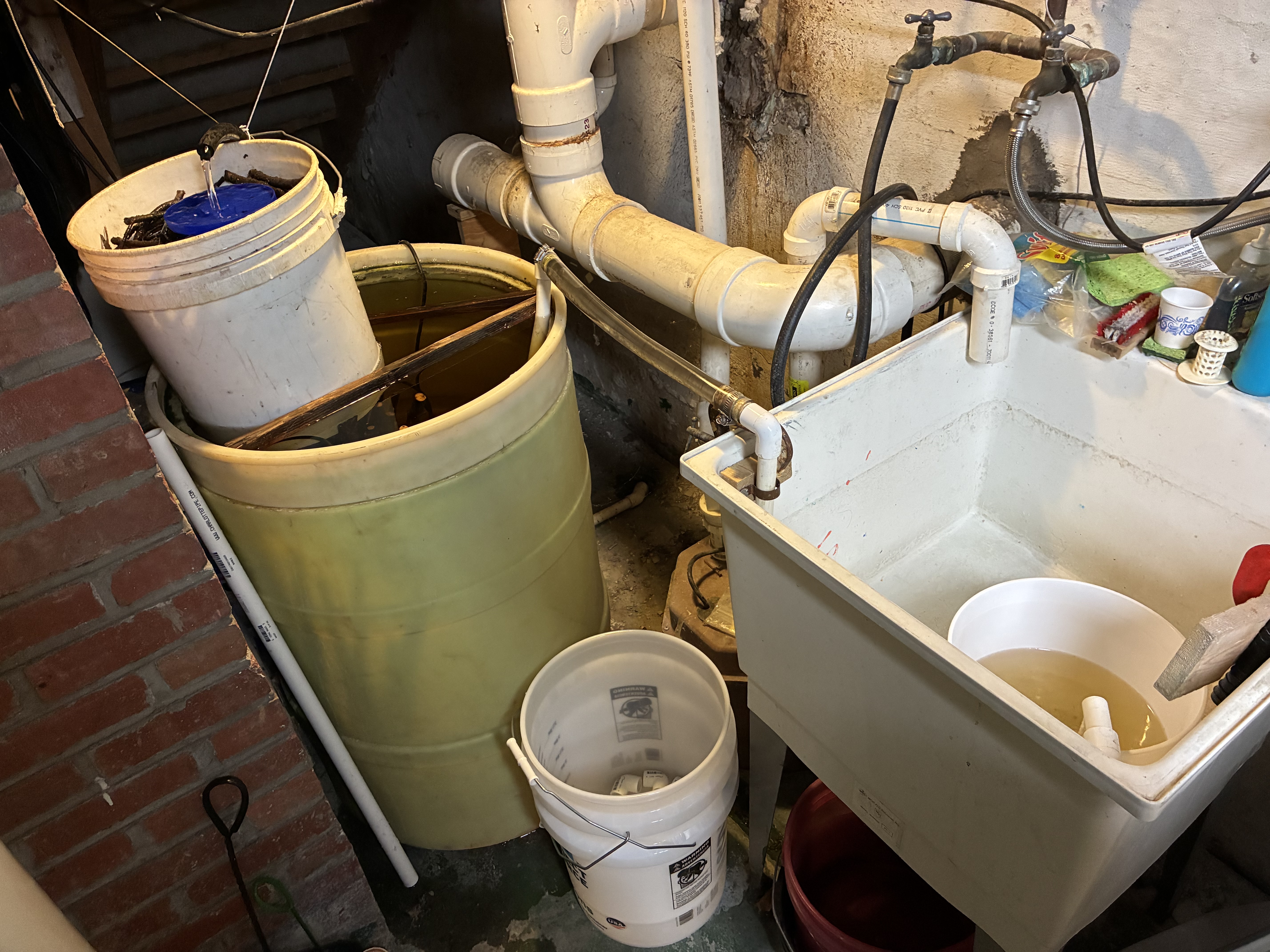
| We contemplate the big picture |
 | 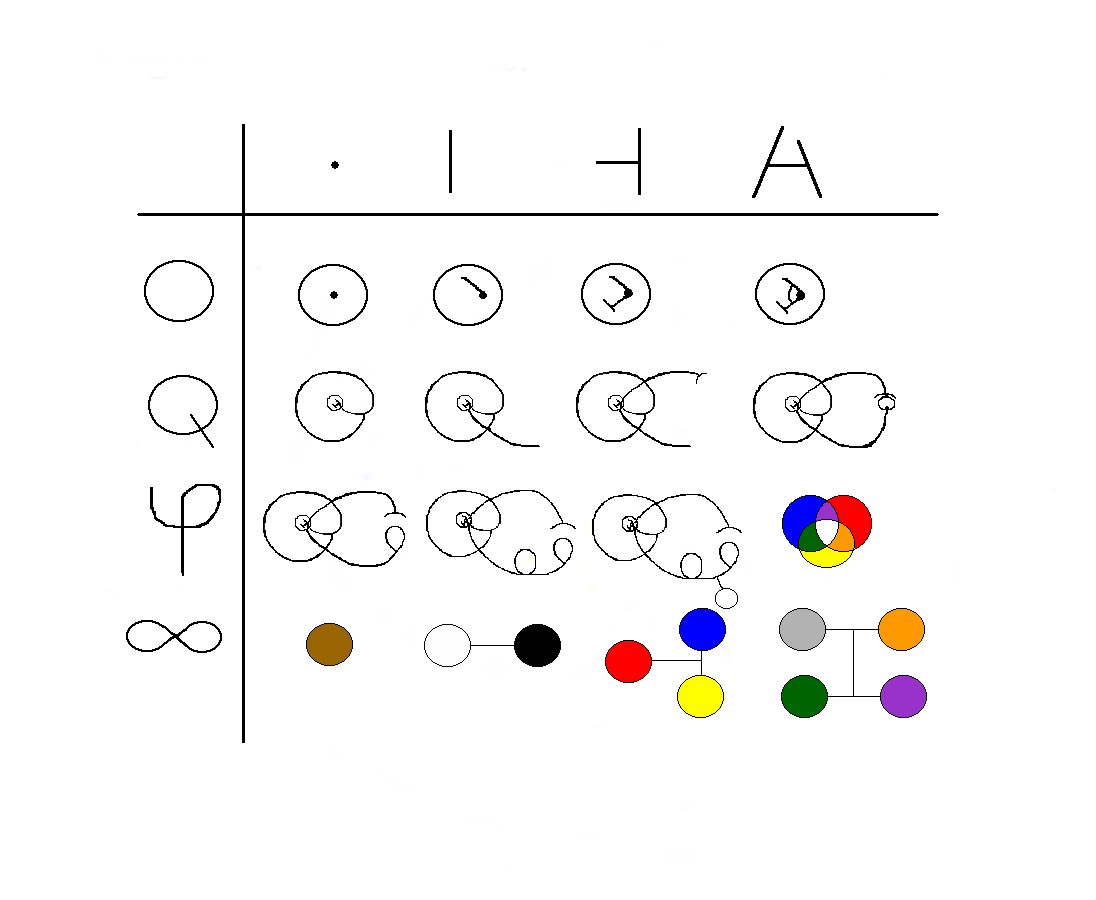 |  |  |
Jere Northrop: Ecological Intelligence
Define Ecological Intelligence (EI) as the fundamental structure and process by which biological ecosystems and their constituent organisms and subecosystems make decisions that initiate the actions by which the ecosystems and organisms function and evolve on our planet Earth.
- some examples of EI to create an intuitive understanding of what it is and how it is relevant to your own personal experience
- the historical development of EI, how Human Intelligence (HI) evolved from EI, and how this has generated some of the critical problems and issues that humanity is currently facing
- more technical discussions as to what EI is, how it works, why it is important, and how all of us can lead happy and more sustainable lives by being aware of it.
Montijn van Loo: A Unifying Framework for the Conscious Experience and a Ground-Up Neuroethics
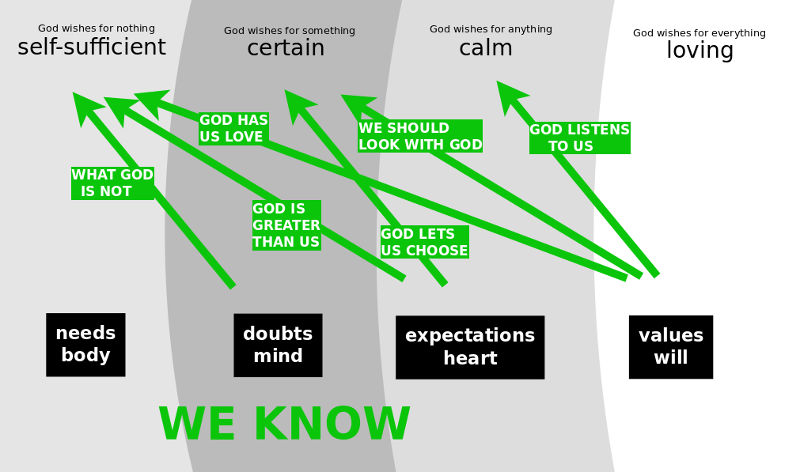
- In the experiential investigation, a unifying framework (Formology) of the conscious experience (CE) is proposed.
- In the motivational investigation, a ground-up neuro ethics is proposed.
- A Neural Method suitable account is given of the mechanisms that underlie the CE of so called trials, where trials are decision making processes involving cognitive control...
- Three possible claims are discussed which regard the intra- and inter individual motivational structure in the trial of stories and the sharing of plots...
- This fundamental structure inspires an neuro ethics called Will to Beauty...
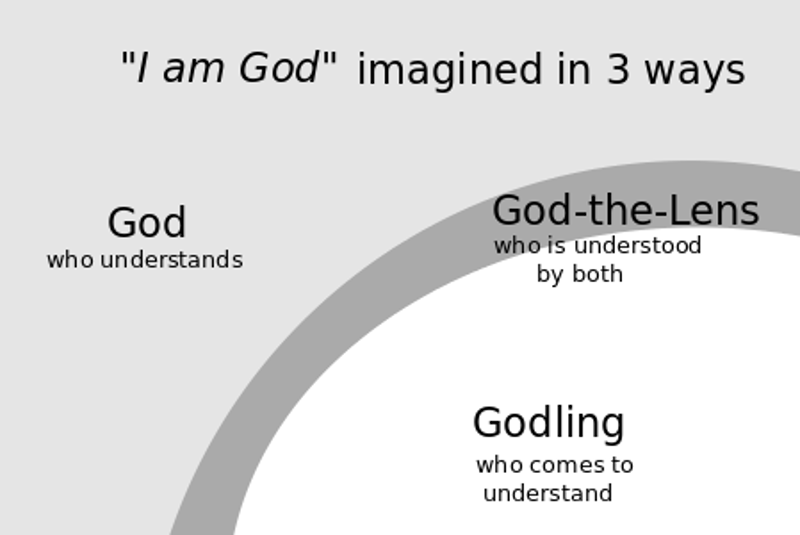 |  |  |
Andrius Kulikauskas: Imagining God's State of Mind as a Question: Is God Necessary?
My method is to survey and systematize the ways that I sincerely imagine God. I note different pronouns by which I have God refer to God.
- In 3 ways, I imagine what God experiences in the first person, "I am God".
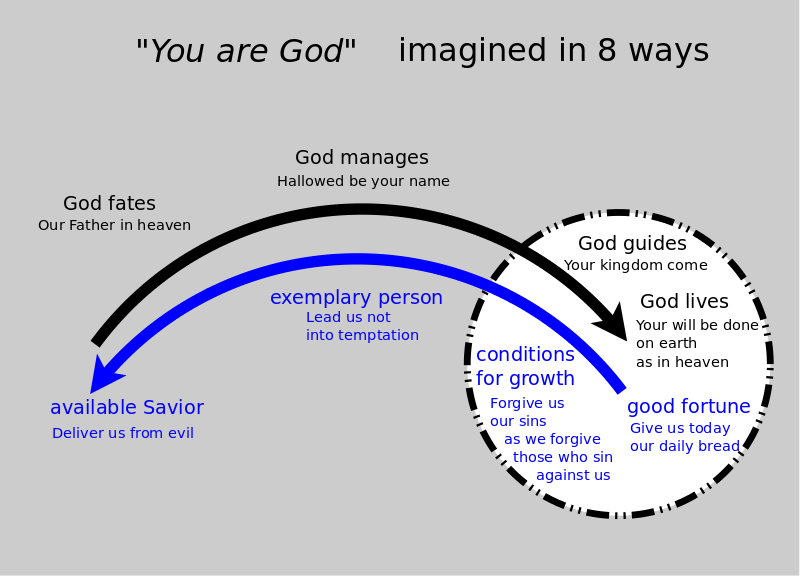
- In 8 ways, I imagine God addressing God as the second person, "You are God".
- In 10 ways, I imagine God observing God as the third person, "That is God".
- In 3 ways, I imagine preconditions for God and for me as well, by which God lives through me: God is God.
Taken together, these 24 ways describe God's dance, which I present.
We cultivate a shared language of wisdom
Andrius Kulikauskas leads our work to bring together our personal languages of wisdom, including his own Wondrous Wisdom, into a shared universal language of wisdom.
We are making explicit our unique vantage points:
- What is your deepest value in life, which includes all of your other values?
- What is your relationship with truth?
We are investigating how to map these out for a landscape of truth.
At Theory Translator, we are collecting examples of conceptual frameworks, starting with:
- Three levels of awareness, or simply, three minds: answering, questioning, investigating.
- Divisions of everything into two, three, four or more perspectives.
We are thus clarifying the building blocks of the language of wisdom.
We are collecting and systematizing the ways we figure things out.
- Every discipline has an epistemology based on its ideal observer.
- Every thinker has a personal epistemology.
Andrius has sketched out the epistemologies for 8 disciplines and 7 thinkers and they all manifest the same 24-fold system. Can we replicate and extend his findings? We are developing an AI process to automate this collection and systematization.
Are you curious about the big picture?
We learn about each other's understanding of the big picture. We are meeting every other week. We help Andrius investigate How do issues come to matter? and he shows the relevance of Wondrous Wisdom. Montijn van Loo presents his Formology and draws from our interactions. Jere Northrop, Steph Macurdy and Ben de Vries complete our group.
We also have lots of one-on-one meetings. Andrius meets every other week to work with Montijn, Ben, and Jere, and weekly with Andrej and John. We exchange letters at the Math 4 Wisdom email group which you are welcome to join. We are active at this Econet wiki. You can find Andrius and several more of us at the Active Inference Institute Discord Server.
Are you curious about the big picture? Do you have questions that you want to investigate? You are welcome to join us! Contact us and participate.